
The article affirms the cost of the conflict in northeastern Nigeria as enormous and disheartening. And notes that the government’s attempts to meet security needs are not adequately meeting “human security needs.” To do so, they need to tackle root causes of the conflict, including poor governance, alienation, and humiliation of ethnic groups, one-sided historical narratives and territorial authority. Published by PeaceSigns (September 24, 2015). Read more
All posts by charleyblogging
Peace on the Hill: Peace I leave with you…
Posted by charleyblogging on March 26, 2024
https://charlbiorah.blog/2024/03/26/peace-on-the-hill-peace-i-leave-with-you/
Unconditional giving transforms us
The article reinstates our ethical and moral responsibility as a privileged nation and as Christians, to model the practice of giving unconditionally (2 Cor. 9:4-15). This practice transforms the institutional character or collective act into a personalized humbling experience of love that is found while assisting others. It is important that U.S. assistance be carried out efficiently and well. Published by Anabaptist World (May 11, 2015). Read more. This article was originally published by Mennonite World Review
Posted by charleyblogging on March 26, 2024
https://charlbiorah.blog/2024/03/26/unconditional-giving-transforms-us/
Would a peacebuilding strategy respond to Nigeria’s unanswered questions?
The article calls for a comprehensive strategy for building peace and reconciliation in Nigeria – and which puts local voices at the centre. Published by Peace Direct in peaceinsight.org (10 Oct 2014). Read more
Posted by charleyblogging on March 26, 2024
https://charlbiorah.blog/2024/03/26/would-a-peacebuilding-strategy-respond-to-nigerias-unanswered-questions/
Support for the Victims of Boko Haram Must Tackle Roots of Violence
The article proposes that the Nigerian government’s efforts to addressing insurgencies would be far more effective with parallel programs targeting the root causes of violence and terrorism. Published by PeaceVoice (18th July, 2014). Read more
Republished and references: COUNTERPUNCH: Support for the Victims of Boko Haram
Posted by charleyblogging on March 26, 2024
https://charlbiorah.blog/2024/03/26/support-for-the-victims-of-boko-haram-must-tackle-roots-of-violence/
Nigeria: beyond the silence of guns and bombs
The article looks into the need for the Nigerian government to have an extensive, coordinated approach to sustainable peace, and how this can be achieved. Published by Peace Direct in peaceinsight.org (14 July 2014). Read more
Posted by charleyblogging on March 26, 2024
https://charlbiorah.blog/2024/03/26/nigeria-beyond-the-silence-of-guns-and-bombs/
Art as a Practice of Liberation
I am convinced that my inability or incapacity to be who I should be, is surely dependent on the fact that opportunities for motivation might not have been discovered by myself or available. But the world is a space for motivational opportunities. My conceived ideas remain unknown to the World around me because I have not been able to communicate this great gift from within, to all. I have finally become a slave to myself and need to be liberated.What an irony? The human person imprisons his/herself. These conceived ideas that remain as inactive within me, are part of the process for change, transformation, creation or restoration which actively take place in every context. The recently concluded Human Loom Project – ‘aPEACEinProcess’ describes such a reality and it is affirmed in the artist statement of Pat Augsburger.
Suzi Gablik pictures my experience as that of ‘an engaged artist’ in the words of R. Murray Schafer, a composer, writer and media theorist who lives in rural Ontario. Suzi shares her thought in The Reenchantment of Art thus;
Art moved by empathic attunement, not tied to an art-historical logic but orienting us to recognize that we are part of an interconnected web that ultimately we cannot dominate. Such art begins to offer a completely way of looking at the world. (p. 88)
 The fact that my individuality is not dishonored by the opportunity of a collective or communal participation (a collective energy and synergy) and engagement for which i am part of (the human loom project); and that the presence of the collectivity meant an accompaniment and boost to me, made me liberated from inactivity to activity. Our divisible uniqueness as individuals became an indivisible community bond of uniqueness beautifully woven into the human loom. My individuality adds to the collective beauty of our world.
Presenting this experience as a renewing phenomenon that explains the great deal of uncontrolled dynamics of intangible variables in life, resonates with Colin Wilson’s words “I believe that within a short space of time – perhaps a mere generation – we shall see the emergence of a new type of human being, and that many people now alive may be the first to accomplish this breakthrough”. It is about the liberation of the human person from the social construct and entire structure of thinking and experience in our world.
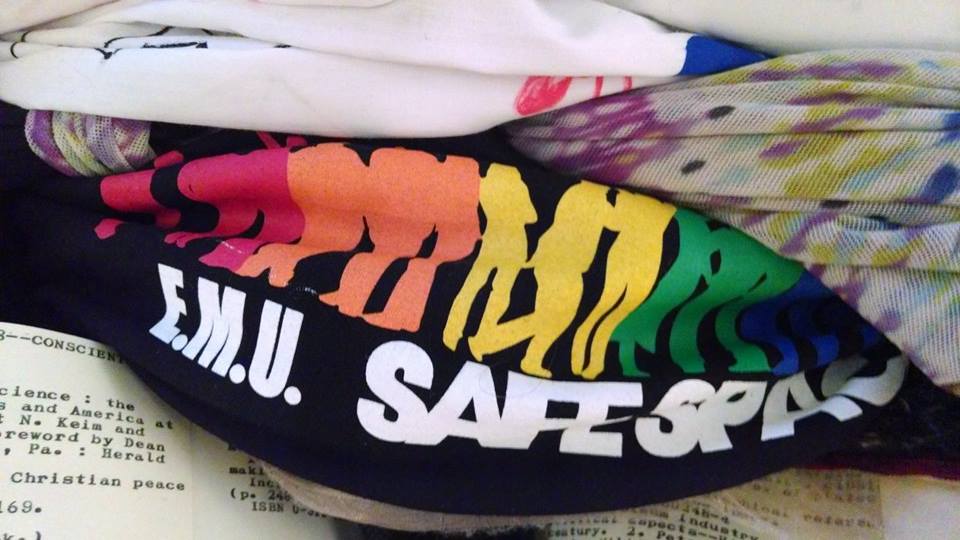
Reflecting on this liberation experience makes me regard it as a magic which is undeniable. The wall of individualism and private space was broken by the power of intention surrounding the project. The fact that all participants brought in their own gifts of fabric and weavable materials/items without pre-informed conditions or modalities, disclosed or revealed the awesomeness of the elegant outcome. It empowered integration, exchange and acknowledgement among the community of participants.
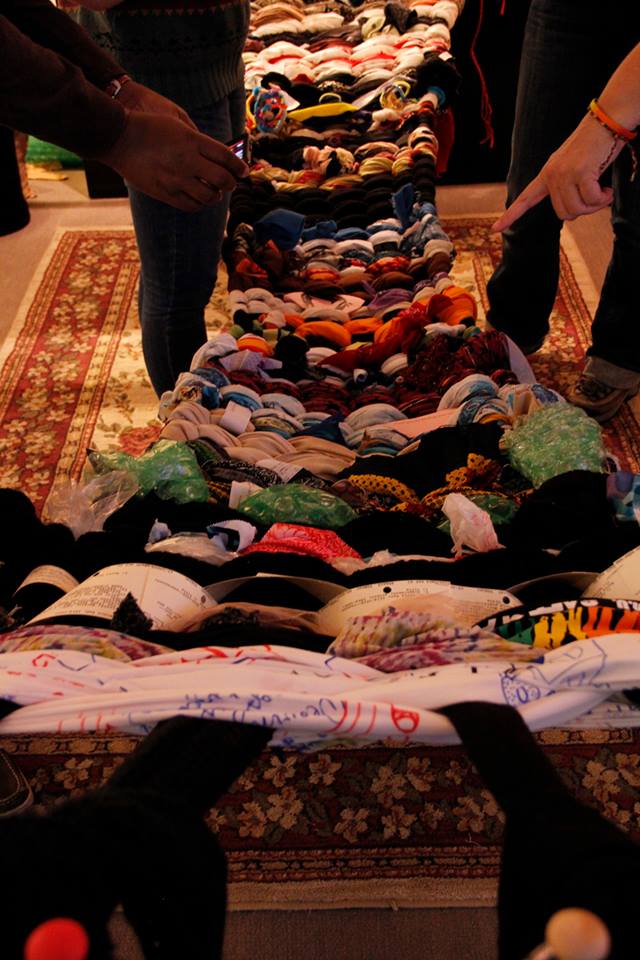 It might be a mindset on my part, but I am convinced that since this life presents itself in our current society as an endless accumulation of meaningless spectacles, originating in the loss of any unifying narrative of the world and of transformational freedom, liberation is indeed inevitable when there is a safe space.
Posted by charleyblogging on November 26, 2013
https://charlbiorah.blog/2013/11/26/art-as-a-practice-of-liberation/
The Necessary Change: A Case for National Dialogue as Process and Product.
Abstract
Faced with the contest of perspectives regarding the birth of Nigeria and the conflicting notions surrounding the adequate or the accurate interventions towards the lingering northern Nigeria violence; this piece posits an exploratory attempt or approach for a sustainable transparent dialogue or common ground for a just peace and a sustainable peace irrespective of what appears to be an irreconcilable reality in the proposed national dialogue. A proactive integration of all forms of conflict mitigating interventions by all vested stakeholders and the openness of Nigerians to a seeming transformation as both process and product for understanding differences, would possibly lead to not only reduction of violence, but possible reconciliation. It is never easy but it is possible. This work unfolds the perspective that the presence of new approaches and innovations with perspectives would ignite the change, which an indigenous Nigeria needs, since such changes depend on results. Also, it is pertinent to affirm the fact that anything that supports reflective conversations among new and different parts of our ‘diverse’ nationhood is of utmost importance. Through this ‘risky’ process new information is gotten; new meanings develop and our nation grows in intelligence together with our national agency empowered in response to the social-construct structure, which Nigeria is anchored.
Introduction:
It is no doubt that the dynamics of inter and intra personal, ethnic and religious relationships in Nigeria have not been pleasant and encouraging. The tensions that exist among the diverse ethnic groups of over 250 have been channeled into so many dimensions of the national life[i]. Being structured into 4 major geographic regions, each of these does not find in the other, a common national identity but an indigenous identity, which is entirely tied to culture and language. The pre-colonial Nigeria was characterized by such irreconcilable difference that was probably neglected at the formation of an amalgamated Nigerian nation state, which today am sure Nigerians desire to renegotiate[ii].
Looking at history:
The fact is that the pre-colonial Nigeria was uncompromisingly heterogeneous both in culture, tribe/language and organization (governance). Before the 1861 colonization of Nigeria organizationally, without any form of consultation of the diverse tribal segments, early states existed before 1800[iii]. All these states and societies were said to have their peculiar administrative structures and policies which relatively communicated with external factors or influences or challenges of time, ranging from economic, political, social, religious and educational. We must appreciate and recall the various stages of our nation’s birth amidst the fact of bitterness as many feel about it or about the fact that such a narrative would be regarded as a taboo not to be mentioned but live with.
What about the Colonial Nigeria? In 1851 Lagos was attacked, bombarded by British gunboats leading to the colonial rule. Historians call this, the annexation of Lagos[iv]. The British expelled Kosoko, the Lagos king, and installed Akintoye, whom they recognized as finally one in allegiance towards them. Ten years later in 1861 the British government declared Lagos a colony of Britain. This was the beginning of the formal rule of Nigeria by Britain. In 1914, Nigeria was united and in 1922 there was the Clifford Constitution to administer the Divide and Rule policy for Nigeria. A continued tension existed among the North, South and East as the new council formed by Clifford never favored the north. The North had only a numerical advantage while the South and East had educational advantage. In 1953, Federalism was fully entrenched in Nigeria.
In the search for our identity and in the quest to have our ‘common identity’ recognized, honored and respected, de-colonialization stage was ushered. This might be regarded as the maturation stage of human growth process, as it was the period of Nationalist movements and the regaining of Independence by Nigerians. Nigeria’s attainment of independence was a peaceful one, thereby implying that Nigerians had no radical quest for a national identity. Though scholarly presentation indicate thus:
“The early Nigerian resistance fighters fought hard to keep the Europeans away from dominating their lands. They did not believe that they required British ‘Protection’ to continue to live in the world. They wanted to be free to live their lives as they chose and enter into negotiations with any powers of their choice. After the imposition of British rule many people continued the resistance against foreign rule. The resistance was sometimes passive, sometimes diplomatic and constitutional and sometimes violent”[v]
Nigerians achieved political independence in 1960 though initially it was suggested for 1956. By this process, Nigerians could once again have control over their own country’s affairs. At this time of decolonization, the Nigerian educated elites and the traditional rulers began to share a common historical consciousness as it summed up to a shared vision of Nigerian dream. This nationalistic dream began to cut across ethnic, linguistic and cultural boundaries and to acquire the character of a struggle for justice, equity, cultural freedom and participation in government. It was a period of hope founded on transparency, trust and modesty.
Current dynamics and Transformational opportunities:
Our current socio-political and economic scenario is another revelation of an ulcerated skin. The fact that politics, governance and religion are intertwined and twisted by political players makes inter and intra ethnic relationships more complicated than imagined. Political parties have become glorified or secularized religious and ethnic groups. Names of political parties and their philosophies have become more sectarian and divide oriented. It becomes inevitably the case for concern, when political campaigns/rallies become the preaching spaces for religious concepts and the memoranda of parties are interpreted or translated religious doctrines. The nationalistic spirit and interest of the heroes past are long forgotten for self-aligned ones. The pattern of Nigerian political economy is therefore characterized by, instability, conflicting social, religious, regional and ethnic interest; and a preoccupation with distribution of resources, rather than creation of wealth. Worthy of note is the fact that the problem of Nigerian economy is that of over dependence on oil. The neglect of the economy on agriculture, the problem of external borrowing, misappropriation of funds, corruption or indiscipline, low productivity in all sectors, the problem of external dependence, low quality education; the problem of inflationary trend; the problem of instability, unemployment, smuggling, the problem of privatization, violent conflicts, the problem of rural poverty and urban misery; which have all been said to accrue from the nature of Nigerian state and Federalism having in mind its analytical description[vi]; Also, the fact that there has been biased or unguided exercise of autonomy by state governments[vii], should be a prioritized item for discussion as the phenomenon has led to resource conflict and the quest for power control as well.
The glorification of corruption in the national life of the ‘Giant of Africa’ has given rise to uncountable discomforts, one of which is ethnic militia group formations[viii] that threaten not only democracy but also our unity. This phenomenon points to the principle of sub-nationalism, and the effects of these groups have left the country in a pulsated mode as it increases tensions and brews the uncertainty of our unity as Nigerians. The puzzle at this juncture is whether a justification for such sub-nationalistic attitudes be encouraged or the threatened national unity be protected by abusing the human rights of expression. The defense of a cause that violates human rights is certainly in itself not an applauded cause.
Amidst the existential intrinsic differences, which are perceived in the ‘amalgamated entity’ called Nigeria, is the commonality that becomes a transforming ingredient to a rebranded and renewed identity. The human dignity model[ix] of conflict transformation and resolution, which is being championed by Donna Hicks in her work ‘Dignity’,[x] should be made incarnate through an engaged pedagogy process in all levels of the systemic society. All forms of interventions to be designed and implemented, whether humanitarian assistance and development, human security, protection and early warning, psychosocial trauma and healing, distributive, transitional and restorative kinds of Justice, all forms of analysis, strategies and skills together with leadership which is very critical to the issues of conflicts and development[xi]; should be in my perspective, integrative spaces in which the human dignity model would be adopted or included.
This work does not in any way make a case for such inclusion but the fact that the principles of ‘bonding’ and ‘bridging’ should be foundational in the peacebuilding field, and most likely visualized as a possible process for the repositioning of the principles for which our nation was founded. I would then not escape from the perspective that there might be endless chaos and impending fragility to the Nigerian context when all regions and groups together with individuals do not see the necessity to honor and respect the ‘inherent worth’ and ‘birth right’[xii] of the other, regarding other variables like religion, geography, language etc as no longer preferences to the aforementioned model. Inescapable is the reality of misguided insinuations by some elder statesmen and biased stakeholders like the recent interview that Alhaji Isa Kaita (a former governor of Kaduna State, north of Nigeria, a prominent member of Arewa Consultative Forum and a founder member of People’s Democratic Party) granted to TELL Magazine, Vol. 41 on October 16th, 2013.[xiii] I am of the view that when the worth of the human person or human dignity is made primal to all forms of national principles, them there is an adhesive cohesion.
Nigeria needs to creatively use existing communication and problem solving mechanisms or develop new mechanisms in order to respond to post complex or existing violent situations. These mechanisms should also be proactive in nature. Our leadership should as much be trained (in principled and integrative leadership theory and skills) in comparison to the resources that are sunk into the training of trainers, as much as numerous facilitation programs embarked by so many non-governmental organizations. This paper evokes the reaction that transparent and true partnerships should be established between civil society actors, non-governmental organizations, government’s officials or nation states and international actors (such as the UN, INGOs and Funders). National functionaries should deeply be engaged and empowered as much as the other stakeholders.
The search for the ‘seeming’ locally generated intervention to the many challenges of Nigeria’s multi dimensional reality of existence has among so many things, led to wrong policy formulations, biased implementations, patriotic or nationalistic mis-presentations, wrong aligned preferences of ‘matters arising’ by the tiers of government, exaggerated responses from within national life and international collaborators. These dynamics though ‘necessary’ can equally be ‘avoidable’ when right interventions are implemented duly as process and simultaneously as product.
Recalling our history and formulating our narrative as Nigerians is very primary/fundamental to reaffirming our unity in the midst of our unique diversities. We must own and be responsible for our pre-colonial, colonial and postcolonial narratives. Modest and credible historians have and could have had the opportunity to tell the story of Nigeria against the backdrop of a nation, which was a ‘space’ for relationship among various groups, and not ethnic and religious divides. The amalgamation of 1914 did not seem to be a relational space as many have argued, but the independence of 1960 gave Nigerians the once a time opportunity to dialogue and understand.
In the quest for a relational platform, the national conference has emerged. Questions regarding the appropriateness of it in the context of time, events and premeditated outcomes should not be a factor to deter this opportunity. I think that amidst the mechanics of planning/design, implementation and monitoring, if wisely and transparently explored then a transformed nation would emerge.
Inaugurating the committee at the Presidential Villa on Monday October 7th, President Goodluck Jonathan said: “In the task before you, no voice is too small and no opinion is irrelevant. Thus, the views of the sceptics and those of the enthusiasts must be accommodated as you formulate this all-important framework. This Conversation is a People’s Conversation and I urge you to formulate an all-inclusive process that protects the people’s interest.”
As much as the rationale for the constitutional conference or Sovereign national conference (among many names though still wrestling with the appropriateness of the contextualized term) appears juicy, the timeline appears blurred. The Nigerian populace has not been told when the task of the committee is expected to end with recommendations made. For a good planning, time is essential, but it should be respected by any/subsequent administration, and prudence with modesty applied by committee members as well. Some strategic questions need to be answered and clarified by the advisory committee if the confidence of Nigerians is to be restored. Also, the public should have be empowered with a long term knowledge regarding the process. The micro level must not be neglected in this process. Why are we embarking on the national dialogue? Who is credible to be the representing stakeholder, and at what levels would such representations be made? Who are stakeholders? What is being represented or presented as a common interest and good? How would an all participatory and fulfilling representation be enhanced? When would various planning, information gatherings and modalities be put in place? The timeline should be realistic, knowing fully well that another political dispensation is around the corner (hoping that it would not be a tactic for manipulation). Where would the advisory committee sit to receive the memos of stakeholders and listen to people?
Sincere responses to these questions would be an implied or predicted success. The grass-root level (the ward/constituency and local government levels) is as important as the technocrats and the middle class (hoping that there are no sets of standards/criteria for participation that hinder micro level participation). One might ask that when constituent representatives do not represent their wards in anyway, how would the grass-root be involved in the process and also made to own the process. Civil Society Organizations and their Leaders tend to make ‘biased interests’ as demands and no longer the common good of the masses. But how much information has been disseminated about the National Conference and its traits? Education through publicity-mechanisms about meanings, process and implications, is yet to reached/attained.
The essence of this platform for national understanding would be futile if Nigerians are not individually transformed to new perspectives of national life. The pro-active nature of the national dialogue would reveal past hurts and grievances but we must learn to appreciate our differences and allow human dignity to be a common factor for mutuality. My bet is that the conference might not be beneficial if previously neglected needs of the masses are not met. Thematically, the advisory committee saddled with the responsibility of designing it, would not forget about a holistic approach to ensuring security of life, but the status of citizenship and indigene-ship. The right to worship and a place for it should be intrinsic as well. Ethno-religious violence have been brewed from such tensions surrounding the expression of this right of citizenship and the status of a ‘visitor’ within Nigeria, thereby disclosing the fact that Nigerians are regarded as visitors within their own country. It should respect religion and its rights. Resource control, management and distribution among other things should be given serious attention.
When the national dialogue/conference becomes a common ground, it becomes the moment to create a nation state particular to our people, having a system of government that is characterized by conclusive participation. No group is ineligible for this conference. Nationalized/Naturalized Foreigners in Nigeria should have an input to make as well. We need an unbiased ‘third eyes’. There must be an ownership and responsibility of our constitution and its process. We must be unique in our ideologies and applications (sensitive to culture and respect communities and their indigenous capacities). There would be an exhaustive litany of matters arising but even though all might not be attended to, caution should be applied as not to neglect the essentials. The challenge foreseen is that there might be a ‘revisit’ of issues. So many have been hurt and healing with a probable reconciliation might crop up. The ‘needs’ that are regarded as ‘unmet’ might be demanded back. This is for a ‘rebirth’ of the constitution and the nation together with our perspectives as Nigerians. Nigeria must learn how to accept realities as they come and not shy away from possible situations that are threatening to our unity, but try to manage these situations properly to attain a mutual and co-existing’ nation.
The cast shadow
There are moments when genuine intentions/existents are implemented at the wrong contexts, and the right contexts have also had wrong intentions/existents imposed on them too. The credibility of intentions till today still faces different measuring variables. The National Dialogue, which the president of Nigeria conceives at this current ‘mixed’ and ‘unclear’ manifested of the Nigerian history, seems to be disconnected from the ‘sovereign’ characteristic of the dialogue. The fact that the national dialogue’s report has to be scrutinized and approved by the national assembly is a clear indicator that the presidential guideline seemingly creates restriction, limitation of the right of expression and distrust. There are ‘no go areas’ taboos that should not be discussed. This highest national governing arm of government still faces inter and intra house-conflicts that have created a ‘shadow’ division of interests on the grounds of politics, religion and ethnicity. Genuine patriots of our country no longer ignite nationalistic ideologies.
The core reason for this dialogue is the fact that the governing machineries struggle to coordinate or manage our diversities. Militia groups’ formations are gradually becoming re-energized for a goal that Nigerians would not even think about. It had better not be imagined I should believe. One would convincingly ask if the national dialogue would mean a dramatic pause to the forthcoming 2015 presidential elections, or whether it would enjoy the political grace of sustainability by another political dispensation, genuinely guiding the process to a transparent conclusion.
The civil society organizations in Nigeria have not really exercised strong agencies that would stir transformations. Partisan politicking seems to have a way of infecting the nucleus of our country. Knowledge and awareness of individual human rights, which have not been made available to 75 percent of Nigerians cripple the ability and capacity of the ‘national agency’ to be in operation.
Conclusion
Whether there is a guarantee for sustenance of peace after the conference or after their recommendation might have been implemented, is another ball game. At both intra and inter levels of co-existence is the challenge of sincere approach to the whole process of dialogue. Creating a space for the integration of diversified interventions by all stakeholders/organizations involved in the peacebuilding process would be a symbol and indication of sustaining peace, development and wellbeing in a post conflict context.
Intra ethnic conflicts in Nigeria have escalated and to de-escalate such there is an indispensable need to being receptive to transformational dynamisms. Amidst the fact of international or external actors in the process of violent conflict mitigation and intervention implementation, Nigeria should have the agency to generate her own pattern and indigenous designs and mechanisms for development and sustainable peace. A proactive reflection on the escalated violence in the north for example could be drawn from the lessons postulated by Donald Steinberg in the Conflict Prevention and Resolution Forum at Washington DC which was organized by Search For Common Ground, and moderated by Sandra Melone the executive vice president of SFCG. Thus, Don affirms that the possible reasons for escalation of violence could be that urbanization and population are rapid within a weak economy society, the populace are denied political participation, civil societies become absent, while ‘spoiling’ neighbors fuel their situations, violent contexts are militarized by their governments thereby increasing tensions and retaliations together with the ‘unfolding’ of grievances over past hurts and violence[xiv].
Perhaps, the disagreement that arises among political stakeholders and ethnic groups regarding the national dialogue tends to portray the fear and skepticism, which do exist within the Nigerian society.[xv] According to records, the National Dialogue or in its various ideal nomenclatures, Sovereign National Conference, Constitutional Conference was held in 1976, 1978, 1988, 1994/95 and 2005.[xvi] Against the mindset of some politicians that it will lead to a break-up and disunity,[xvii]is the fact that our multi perspective or diversity should be encouraged in respect of ideas and approaches towards a reconstructed and renewed nation. Disagreements among stakeholders at various levels should not only be invited but also welcomed, as this will prompt ‘outside the box’ creativity among Nigerians. The national dialogue should not be an urbanized affair or issue, high-jacked by the elite class to the detriment of the non-elites at the grass roots.
Anchoring an anticipated change is not only worrisome but could be indeed a twisted phenomenon. Education and information dissemination, which is both trusted and transparent, must be encouraged. Unfortunately, the Nigerian society gets more information about political rallies and impending political dispensation, gets educated about party votes than the need for such a national dialogue. Publicity is lowly esteemed as an important factor towards its success. The presence of new approaches and innovations with perspectives would ignite the change, which an indigenous Nigeria needs, since such changes depend on results. Also, it is pertinent to affirm the fact that anything that supports reflective conversations among new and different parts of our ‘diverse’ nationhood is of utmost importance. Through this ‘risky’ process new information is gotten; new meanings develop and our nation grows in intelligence together with our national agency empowered in response to the social construct – structure.
Setting the standards for determining the values in our society remains contestable, acknowledging the fact that corruption remains christened and glorified by the judicial or justice system, that seems to be the instrument of the high and mighty in the society. The mechanisms that the government and her people create in the mitigation of violent conflicts must respect human life, human right and human dignity. Studies in social sciences have proven that culture of a people or situation changes when behaviors change, pointing to the inescapable truth – that managing conflict or transforming conflict starts with oneself being open to individual change/transformation.
In knitting my perspectives, I should say that when international actors and conflict mitigating stakeholders, Non governmental and non profit international and local organizations partner with the government of Nigeria on the spectrum of peacebuilding regarding sustainable development, well meaning and just peace society, then the Federal government’s strategies for peace and development together with her perspectives would be spurred to deconstruction and transformation or sensitively and contextually managed or transformed into an integrative non adversarial holistic intervention. It is never easy, but it is possible.
[ii]http://books.google.com/books?id=EGfBEhK3fo4C&pg=PA90&lpg=PA90&dq=the+dissatisfaction+with+amalgamation+of+nigeria&source=bl&ots=juGU6BGJ4D&sig=bl2Zct274qzhXkG6JL4fUolj5zw&hl=en&sa=X&ei=vuZpUo_ZBsjckQet7YGIAg&ved=0CDgQ6AEwAg#v=onepage&q=the%20dissatisfaction%20with%20amalgamation%20of%20nigeria&f=false
[iii] G.I.C.Eluwa et al. 1988. A History of Nigeria for Schools and Colleges, Nigeria: Africana-First Publications Ltd, pp. 18-60. The early states before 1800 have been enumerated as (1) The Kanem – Borno Empire (2) The Hausa City-States (3) The Jukun Kingdom of the middle Benue Region (4) The Nupe Kingdom (5) The Edo Empire of Benin (6) The Oyo Empire; Also we have the states and societies of Southern Nigeria before 1800 namely (1) The Igboland (2) The Ijo City –States (3) The Ibibio and Efik People of Cross River (4) The Urhobo Community (5) The Itsekiri Kingdom.
[iv] Omolewa. M. 1986. Certificate History of Nigeria, Lagos: Longman Publishers, p. 155
[v] Ibid., p. 182
[vi] Dr.Abbas (ABU Zaria) Lectures on ‘The nature of the Nigerian State and Federalism’ presents the four analytical dimensions as – (1) As a product of conflicting interest and power struggle. It is possible to see it also as reflecting many sided dominance which makes it as an agenda for discuss setting institution. (2) As a manifestation of structures which lay down its frame work for its mode of functioning and therefore impose certain orders on both the state and the rest of the society and to some extent determine the behavior of the people. (3) As an arena for interactions and conflicts between the contending social forces. And (4) As an actor in his own right which by the form of its own organization and mode of functioning exerts a relatively autonomous influence on outcomes of conflicts and other processes in the society.
[vii] http://universalreporters247.blogspot.com/2013/10/tell-governor-shettima-we-dont-need.html?spref=fb
[viii]http://books.google.com/books?id=3XefsKjlhfAC&printsec=frontcover&dq=militia+groups+in+nigeria&hl=en&sa=X&ei=NfVpUorELcTAkQeZqoHQAQ&ved=0CC8Q6AEwAA#v=onepage&q=militia%20groups%20in%20nigeria&f=false
[xi] Kwuelum, C.O. 2013. “Non-violence: An Antidote to the violence of Northern Nigeria”, p. 8 in http://easternmennonite.academia.edu/CharlesKwuelum
[xii] Hicks. D. 2011. Dignity: The Essential Role it plays in Resolving Conflict. New Haven: Yale University Press, p. 4
[xiii] http://lyndre247gists.wordpress.com/tag/alhaji-isa-lawal-kaita/ : http://lyndre247gists.wordpress.com/2013/10/26/boko-haram-will-end-when-the-north-takes-over-the-presidency-alhaji-isa-lawal-kaita/ & http://eagleyereportconnect.blogspot.com/2013/10/exposed-boko-haram-will-end-if.html
[xiv] (Webcast) conflict prevention forum: integrated peacebuilding II- the relationship between international development and building sustainable peace – a conversation with Don Steinberg, by Executive Vice President (SFCG) Sandra Djuvara Melone in
http://webcast.jhu.edu/Mediasite/Play/aa0181ccc9be407b8da86772197035061d
[xvi] ireporterstv.co/national-conference-northern-elders-say-they-are-not-afraid-of-nigerias-break-up/?from=fb
Posted by charleyblogging on November 6, 2013
https://charlbiorah.blog/2013/11/06/the-necessary-change-a-case-for-national-dialogue-as-process-and-product/
Nonviolence: An Antidote to Boko Haram Violence (2)
Exploring the depth of reasons
Realizing the centrality of the group as actor in contemporary conflict, it gives space for the systematic analysis a group and the organization they might claim to represent (identity group formation), the dynamics of interaction and also collective action (Demmers. J. 2012). Since conflict four-dimensional (personal, relational, structural and cultural), it is a complex phenomenon that fosters interaction among actors with distinct identities, needs and interests; thereby endowing contemporary violent conflict with its particular character and leads to joint violence which Kalyvas (2003) describes as saddling the divide between the political and private, the collective and the individual.
Worthy of note is that the sect pointed out the fact of corruption on the part of politicians for the inequality of distribution of economic resources/poverty, joblessness/unemployment, lack of infrastructures, biased governance or protection of ethnic interests as some reasons for such a religious intervention termed ‘Purification’ as inspirational of their actions. These socio-economic grievances as indicated by the former president of Nigeria, Olusegun Obasanjo during a BBC Radio and Television Interview (2012, September 14th)[i], alongside their quest for the Independent Islamic State (referring to the 12 northern states) constantly fuel the numerous bombings on worship places, destruction of lives and property and even psychological fear and hurt as a result of the effects/impacts on both Christians and Muslims. This has also led to the economic paralysis of the north and the forceful relocation of visitors/non indigenes and discouragement of both local and foreign investors. The Federal Government on her part has always imposed curfews, the military and the police at times, in the management of the conflicts and also established panels of inquiry/commissions and made little financial compensation over lost lives.
My personal stake regarding the various causes of this ‘uprising’ might be that this group (and probably others) have been asking questions regarding/surrounding their dignity which has a nexus with the human needs theory and group identity formation.
There has been series of Boko Haram attacks in northern Nigeria as follows: 2010 – Bauchi; 2010 – Abuja; 2011 – Abuja; 2011 – Yobe and Borno; 2011 – Niger; 2012 – Kano, Bauchi, Gombe, Borno, Yobe and Kaduna. These attacks have at times resulted to reprisal attacks on the part of Christians. The bombings in Zaria and Kaduna towns in June 2012 resulted to the killing of innocent non-Christian travelers by angry Christian youths at the interception between Abuja (Federal Capital Territory) and other northern states. It was indeed tragic – a bloodbath as retaliation. Current attacks are still recorded in which innocent civilians; irrespective of identity of any sort are preys to guns and bombs exhibited in fury.
The threats that come from the South, East and West Militia groups are often times seen as justifiable ‘ as the face of sympathy is sought through empathy’. The reasons for which all these groups have operated should be harnessed and tailored for a holistic peacebuilding approach/intervention. The kidnapping of foreigners sends a wrong image impression to the world and thereby invite external mitigation, which often times is regarded as unhealthy as the partial interventions, which the government in Nigeria at her three-tier levels has unfolded in the past decade.
Many more violent conflicts that are deeply influenced by socio-political irregularities, together with the Nigerian ethnic complexity, grounded in the domination/control of Religion, have unfolded after that of June. More innocent worshippers have been killed, and just on Monday, October 1st, university students no fewer than forty (40) were killed by Gunmen regarded as Islamic militia-Boko Haram in a town called Mubi in Borno State[ii]. So many have been killed with their dreams terminated, children who are fortunate to be alive have become orphans; lucky women have become widows or some forced into childlessness after the death of their children. This has led to crime and drugs, together with large-scale poverty. The very core system of the individual, community and society is destroyed. Nigerians seem to have lost confidence on the government’s ability and capacity to reassure human security and development or the political will of the government, thereby live in fear, confusion and shock.
Timeline and Attacks
There have been recorded attacks of Boko Haram and they are said to have started since 2000 and have been in sequence till date. The Strategies, which the group uses, include Suicide Bombings, Sporadic Gun-Shootings/Gun Violence, Explosives and Kidnappings. The Attacks include Government Security Bases, Places of worship, Relaxation Centers/public places, Schools, Security Personnel, Politicians, Prisons and Financial Institutions/Banks. Some of the Cities/States where they operated are Kano, Kaduna, Jos, Abuja, Suleja/Niger, Bauchi, Gombe, Jigawa, Adamawa, Yobe, Bornu, Katsina. Communication/Media Outfits have also faced destructions, together with Garages/Parks for travelers and the number of Casualties has constantly increased in there Thousands which includes largely women and children.
Government Approach: What is being done.
The measures/initiatives, which the Government has put into this, can be said to worth Billions of Naira at both the Federal and State levels. Apart from unregulated and monitored compensations in terms of money, partial or total Curfews have always been imposed on the conflict-affected contexts thereby restricting and limiting the rights of free movement and meaningful lives. Seen as most pertinent approach to this issue of calming the storm of violence is Militarization. Military Personnel are deployed and empowered to discharge militaristic actions (using extermination principles). In the actual fact, these expensive military operations have led to Human Rights Abuses and Rule of Law. The Joint Task Force (JTF) is the Machinery set up to combat the violence and assumed perpetrators, leading to extended trauma, fear and instability and breakdown in communication and possible system fragmentation. Successful as though it may appear, such an intervention faces the measurement tape of Human Dignity and Rights of the Human Person to constitutional protection and trials. It implies then that the judicial system must be credible and impartial as an umpire of Justice.
The presidency has constantly set up Panels of Inquiry that have in a way been less fruitful/futile. There has not been clear cut constitutional guidelines for formation of such inquiries and subsequently, this has led to improper and weak installation of panels with both political and nepotism undertones. The credibility of the members faces lack of moral impetus. I do think that experienced and ‘academic authorities’ should be involved as Think Tanks for such initiatives. Office or political office holders and opportune Nigerians who are called into serving the country should not see it an opportunity for enrichment but of self-less sacrifice in patriotism. Consultations and exploration of ideas lead to much expected good results than failures.
Adjudication is seen manifested in the Nigerian society without a Constitutional guidance. Tribunals and committees, which are set up, oftentimes point to court-martialing. These have lately led to situations of inadequate constitutional trials with access to litigations being denied. Compensations (financial) have often times been done without proper planning and strategic implementation. Why would not politicians and public office holders who have voted Hundreds of Millions of Naira, not ‘pool’ those compensations together with that of the government for proper disenbursement?
An unprocessed Amnesty that lacks trust is proposed and it receives mixed reaction from both the public and the extremists. The Group (Boko Haram) rejects it; Northern Elders lobby for it and Committee is still inaugurated by the government. As much as it is a good initiative to form an Amnesty, it is worth every serious involvement from all levels of the society. There should be an accurate stakeholder mapping/analysis from which a core group’s perspectives can be knitted. It implies participation and ownership from all parties involved. The Presidency subsequently declares State of Emergency in three states in the north and increases the approach of Militarization upon the conflict-affected contexts. In this extermination military intervention, innocent citizens are killed and ‘culprits’ are killed also without constitutional trials.
What should be done.
Nigeria needs to invest in the empowerment of personnel whose operations involve the control of Borders. Results have shown that most of those involved in the formation of such militia/extremist groups are foreigners from neighboring countries. Intensive border checks and patrols would lead to a possible reduction of illegal immigrants. Citizenship certifications should be improved, amidst the fact that the National Identification Project shows no success story.
There should be a discontinuation of a ‘Gun-Boat Democracy’ in order to allow respect of Rule of Law, Credible Judiciary, Transparent Governance, Respect for Human Right, Equity and search for Legitimacy. Also, there should be De-Militarization of the conflict-affected contexts. Military Presence should be distinguished from Militarization and adequate development culture sensitive interventions put in place for a holistic recovery and subsequent prevention of violent conflicts. This is the Process of deepening Democracy that empowers lives and wellbeing. I should say that peacekeeping and strategic violent conflict prevention that respects live and honors human dignity is what Nigeria needs currently.
Forgiveness, Reconciliation and other mechanisms/steps that are interventions initiated for sustainable just peace, development and wellbeing face the lukewarm disposition of either the victims or recipients of such services, owing to the fact of worldviews and individual perspectives. There should be a rigorous public awareness campaign on reconciliation process together with civil rights advocacy and peace education; also mindful of true commitment to the Federal System, improved infrastructures and Basic Needs of the society. Nelson Mandela is quoted to have said, “ Education is the most powerful weapon which you can use to change the world”. Fortunately, education as a tool would though in a gradual manner and sequence, used to deconstruct Pillars of our worldviews. By this phenomenon, we unlearn to learn.
Creating a Safe Space for Stories of both Victims and Perpetrators through the inauguration of Truth, Reconciliation and Justice Commission should be encouraged. The activities of this commission must be independent of the Government manipulations and should satisfactorily reach the victims and perpetrators at all levels, most especially at the grass root level, respecting each individual’s right to expression and guided by the constitution. Human security must be guaranteed as the society opens herself to walking through the bitter but healing path of recovery and wellbeing. The Law and Constitution should be the yardstick for the process and outcome as no individual or group would act above the Law. The recommendations of the commission and report must be appropriately implemented. This should be at Local Government, State Government and Federal Government Levels.
There should be a ‘behind the scene’ approach to Negotiation. A trusted 3rd party is to engage or meet with Stakeholders behind Cameras in order to create/initiate a common ground for a Reconciliation Program. Also simultaneous with this, is an Amnesty program that gives room for a ‘Hold/Halt’ of actions by both the Government and Boko Haram, while the safe space for stories is created. This will build Trust. The Track II mediation should in every way possible be encouraged.
The proposed Truth Reconciliation and Justice Commission should outline a holistic dimension to Peace building – Psychosocial Trauma Support and Wellbeing, Structural Development, together Restorative Justice (if adopted by the system) and Humanitarian Services. Possible Mediation interventions should be put in place to facilitate the process and also the strategies for reintegration together with psychosocial recovery and wellbeing. Meeting the needs of the internally displaced and probably re-engineering and re-designing the judicial system would go a long way to lubricating the peace process.
All Civil Society Groups that have the power of influence or advocacy over both perpetrators and victims should be engaged in creating awareness for knowledge on Harms that were caused and readiness to ask for forgiveness and possible acceptance of responsibility; also appealing for a space in hearing and telling of stories from victims. Compensations (economic reintegration) should be adequate alongside rehabilitation of the internally displaced. There should also be a commitment on the part of the perpetrators not to incur further injury. Also there should be a new, mutual and enriching relationship being formed/initiated from both parties.
The Tiers of Government should place the priorities of the citizens before other matters at parliaments. The many sessions of the Senate and the House have shown the choice of less important matters over oftentimes, what could be seen as the most important or priority. Worthwhile time should be spent on deliberations of security and wellbeing than trivial and self-centered issues. Also, members must be impartial and objective, guiding against ethnic, religious and political sentiments while deliberating on issues of national unity.
My bet on the issue of what should be done is that the responsibility falls on the shoulders of both the government machineries and the citizens of Nigeria in a collective manner. It is an inclusive and participatory process. I regard it as a path to recovery, which entails not only curbing terrorist actions, but also putting mechanisms in place for prevention and sustainability to avoid national disintegration and fragmentation. Our mitigation effort of the existing conflict should be holistic as the various forms of interventions that Nigeria would not only design but also implement for both short term and long term implications. The approach should be proactive if there is proper management of resources for post violence reconstruction and contextual/situational reconstruction. This reconstruction is strategically at all levels of our society. Leadership is critical and so transformation should be injected into the Tiers of government and politics in order to bring about ‘restored confidence’ by the citizens.
Humanitarian assistance must go along with both structural and human development, through the process of integrating both strategies and initiatives. Security of persons and property must be reengineered strategically to respect human lives while operational. Early warning mechanisms should be put in place as well. The individual and the collective society have been traumatized in various forms by the acts of Boko Haram in the north and so; there should be psychosocial trauma healing on the victims. This would possibly prevent and break the cycle of violence. Education, like leadership is critical and this should be multiple and at all levels in order to ‘redesign’ our worldviews. Our multi ethnicity and religiosity can only be well facilitated towards a common ground for understanding and practice of spirituality from these religious heritages. There should be a ‘safe space’ for exchange of perspectives and so religious leaders play a paramount role in this process. I know that such a process would synthesize the fact that we are all human beings before we took/had our individual and collective religious identities.
Possible strengths and weaknesses
I acknowledge the fact that non-violence has often been regarded by many as a form of weakness or an indication of a sterile agency. The hidden truth about non-violence is that it is the power that controls or transforms violence in whatever form, context or content.
The process will embrace all levels of the society (micro, meso and macro levels in the system). It will be all-inclusive as it exhibits a holistic approach, covering the Peace building wheel, which is a model for social reconstruction after complex and violent conflict. Though it appears an exaggerated process, it involves costs but less that the worth of a just peace society.
The proposed intervention appears to create participation at all levels and it also shows some signs of transparency in participation and commitment. It revitalizes the whole system because it is a transformative process. It implies therefore, an equitable representation and a foundation for sustainable and stable society; as it democratizes the society and its systems/structures. We must not forget the issue of memorials, religious ceremonies and rituals in line with those who lost their lives as a symbol of respect and honor.
Corruption might still be manifest in the handling of the process as long as there is an adequate respect for human rights, dignity and freedom of actions. Also, the clash of inter-ethnic, religious and political interests might still be visible because Nigeria is multi ethnic and religiously indoctrinated. One basic fact is that the credibility of the judicial system is still not strong and so the victims would exhibit lack of trust. The fear of Deceit and Sabotage might among other variables, lead to a lack of interest and lack of commitment from the citizens.
Concluding reflection
Reconciliation would not be a sustainable and genuine process if it were devoid of forgiveness on the part of anyone who is either a victim or an offender. In Peace building Process, the language goes beyond the intellect to the language of the heart because it is a phenomenal emotive force and process. This process can only be realistic when there is ‘openness’ on the part of both parties most especially expressed as in-depth communication, which Thich Nhat Hanh spells out. This kind of loving and compassionate communication ends wars and all forms of conflict. Our wrong perceptions about the other ‘fuels’ conflict and violence.
One should be careful not to exaggerate the status of either the victim or perpetrator. Pathologizing or naming/stigmatizing the parties involved would be making the memories to interpret our future experiences/encounters without minding the ultimate truth that Human Dignity is the underlying and inherent factor, which defines and describes both parties. This might be a new form of dehumanization.
In exploring the three levels of our society, I should say that the grassroots should be empowered with peace education and community capacity increased in such a manner that youths would resist the juicy prices/compensations attached to their recruitment by Boko Haram for example. The community-youth task force is a good initiative but sensitive in itself. This might be mistaken as an opportunity for future gorilla group formation as these youths would still retain weapons and at the same perform jungle justice. Building community peace networks would go a long way to weaken the capacity for violence.
This shows how inadequate the civil/religious bodies and their leaders have been. What is the effect of religion on those who carryout these ungodly and inhuman actions against life either in a manner of initiating attack or in the manner of retaliation. Nigeria as a nation has the capacity to generate indigenous mechanisms (our patterns) to reducing violence and yielding a sustainable just society. This ownership of interventions would also mean our responsibility for the Hope we have for our dear country.
Worthy of note is the fact that dependent on deep objective analysis of conflict and determining the causes of the violence which we experience in the north of Nigeria (and also in the middle belt and south), non violent peacebuilding measures/initiatives if properly coordinated will promote a just, sustainable social, economic and political structures and relationships.
If the Conflict’s intensity were properly monitored, early warning response would be applied through Mediation with Facilitation and Negotiation at the point of awareness leading to possible community capacity building on peace and wellbeing. We should join efforts to prevent the fragmentation of the country our patriotic heroes labored to preserve.
[i] The Interview was reported by one of the media houses in Nigeria – Daily Trust, as written by Abdulkadir Mukhtar, 2012, September 14th). http://www.ailytrust.com.ng/index.php/other-sections/lead-stories/176786-ghaddafis-fall-fuelled-boko-haram-obasanjo
[ii] The information was reported by the media and one of such is The Sun Newspaper
http://www.sunnewsonline.com/new/cover/mubi-massacre-fear-grips-students-in-adamawa/
Sources
- Albert, I. O. 2001. Building Peace, Advancing Democracy: Experience with Third – Party Interventions in Nigeria’s Conflicts. Ibadan: John Archers Ltd.
- Albert, I. O. 1999. Community Conflict in Nigeria: Management, Resolution and Transformation. Ibadan: Spectrum.
- Basta, R. L and Ibrahim, J. eds. 1999. Federalism and Decentralization in Africa: The Multicultural Challenge. Fribourg: Institute of Federalism Fribourg.
- Demmers. J. 2012. Theories of violent conflict: An Introduction. New York: Routledge, Taylor & Francis Group.
- Harnischfeger, J. 2006. “Islamisation and Ethnic Conversion in Nigeria”. Anthropos: Anthropos Institute. Vol. 101.
- Ibrahim, J and Toure Kazah, T. “Ethno-Religious Conflicts in Northern Nigeria” . Nordiska Afrikainstitutet – The Nordic Africa Institute, Research and Analysis on Africa. http://www.nai.uu.se/Publications/news/archives/042ibrahimkazah/
- Ibrahim, J. 1991. “Religion and Political Turbulence in Nigeria”. The Journal of Modern Africa Studies: Cambridge University Press. Vol. 29. No. 1.
- Ikelegbe, A. 2005. “State, Ethnic Militias, and Conflict in Nigeria”. Canadian Journal of African Studies/Revue Canadienne des Etudes Africaines: Canada Association of African Studies. Vol. 39. No. 3.
- Ime, A. J. et al. 2007. “Gun Violence in Nigeria: A Focus on Ethno-Religious Conflict in Kano”. Journal of Public Health Policy: Palgrave Macmillan. Vol. 28.
- Kazah-Toure, T. 2003. Ethno-Religious Conflicts in Kaduna State. Kaduna: Human Rights Monitor.
- Kelechi, A. K. 1996. “Political Economy in Nigeria: The Military, Ethnic Politics and Development”. International Journal of Politics, Culture and Society: Springer. Vol. 10. No.2.
- Kukah, M. H. 1993. Religion, Politics and Power in Northern Nigeria. Ibadan: Spectrum.
- Okpanachi, E. 2010. “Ethno-Religious Identity and Conflict in Northern Nigeria: Understanding the Dynamics of Sharia in Kaduna and Kebbi States”- http://www.ifra-nigeria.org/spip.php?article166
- Salawu, B. 2010. “Ethno-Religious Conflicts in Nigeria: Casual Analysis and Proposals for New Management Strategies”. European Journal of Social Sciences: EuroJournals, Inc. vol. 13. No.3.
- Ukiwo, U. 2003. “Politics, Ethno-Religious Conflicts and Democratic Consolidation in Nigeria”. The Journal of Modern African Studies. Cambridge University Press. Vol. 41. No. 1.
Posted by charleyblogging on October 13, 2013
https://charlbiorah.blog/2013/10/13/nonviolence-an-antidote-to-boko-haram-violence-2/
Nonviolence: An Antidote to Boko Haram Violence (1)
Introduction
It was close to passing the teenage stage in my life, full of euphoria and exuberance for what the Future holds that my worldview was twisted by the violence, which broke out and resulted to the death of thousands, with the destruction of infrastructures thereby causing a ‘pulse’ to social and economic activities. As Displaced students, we had to take refuge in an Army Barracks within the vicinity. Pondering on the violence, which regarded by many as ‘ethno-religious’, I realized during a conversation with some University students around where my institution was situated, that persons or personalities are always regarded as embodiments of religious affiliations or beliefs.
A country, which is multi ethnic and religious, would always face the challenges that come with diversity. When some groups are not properly represented or neglected and their interests and positions seen as insignificant and irrelevant, then the struggle/quest for identity is visible as an exercise of agency. This phenomenon results to Militia group formations (as we have in the Regions of Nigeria currently). I am not in any way exploring the hierarchy of human needs only, according to Maslow as it is proffered in Psychology, which has largely been supplanted by the attachment theory in graduate and clinical psychology and psychiatry but rather tailor the various definitions and the place of human needs in the occurrence/construct of conflicts (The Human Needs Theories of Abraham Maslow (1973), John Burton (1979), Marshall Rosenberg (2003) and Manfred Max-Neef (1987). I should think that this reflection informs us of the necessitated ethnic and religious divide as a result not having our needs met as components of this great entity called Nigeria by the structure of governance[i].
The Seville Statement on Violence written by twenty leading scientists from around the world, in Seville, Spain, on 16 May 1986, concluded clearly that ‘violence was not human nature.’ It convincingly argued that violence was not genetic, and was simply a social construct, and an invention (Dr. Havva KOK, 2013). Therefore, collections of Human Needs Theorists postulate the fact that “Human needs are a powerful source of explanation of human behavior and social interaction. All individuals have needs that they strive to satisfy, either by using the system, ‘acting on the fringes,’ or acting as a reformist or revolutionary. Given this condition, social systems must be responsive to individual needs, or be subject to instability and forced change (possibly through violence or conflict)” (Roger A.Coate and Jerel A. Rosati, 1988).
The Conflict Story
The phenomenal increase of ethno-religious conflicts in Nigeria has been referred to some writers as a rising incidence that is going out of proportion, a badge of national unity and an eruption, which is being traced to the return to civil rule (Ukiwo. 2003). Thus Ikelegbe (2005) affirms, “Since the 1990s, ethnic and ethno-religious contestation and conflicts have escalated in Nigeria. In particular, communal, ethnic, and ethno-religious politicization and mobilization have increased since democratization opened up a political space in May 1999…the very bloody and highly destructive ethnic clashes between the Itsekiris and Ijaws in Delta; the Yoruba and Hausa/Fulani in Lagos, Ogun, Kwara, Kano, Oyo, and Kaduna States; the Yoruba and Igbo in Lagos; the Hausa/Fulani and Igbo in Kano, Kaduna, Abia, and Imo States; the Tivs and the Jukuns and Kutebs in Benue States and Taraba states; and the indigenous ethnic groups in Plateau and the Hausa/Fulani settlers/herdsmen have all included some participation of ethnic militias”.
The present Day northern Nigeria was formerly Northern Protectorate during the colonial era under the British. It is commonly referred to as ‘the Hausa States’[ii] due to its language that is Hausa and culturally rooted in Islam. Islam came into the northern part of Nigeria around the 9th century.[iii] It became more populated as a result of the cease-fire of the civil war which broke out around 1967 -1970 as a result of a unification that was not consented to by both parties (Kelechi.K. 1996). Worthy of note is that the twelve northern states are part of the thirty-six states that makeup Nigeria, including the Federal capital Territory Abuja.[iv]
Such a movement implied that the indigenes of the north would unavoidably come into contact with other religions, cultures, languages and worldviews. One would not at this point negate the fact of incompatibility between the non-Islamic principles and Islamic ones. Such a migration into the northern region of Nigeria caused an economic tension which could be described as manifesting in the form of a growing economic disparity that has led to not only ethno-religious violence, but also escalated Gun violence in the said part of Nigeria (Ime.J et al. 2007). Amidst the fact of coexistence and adaptation, the national life, which is expressed through politics and governance, had its own complexities. The point I want to make here is that even though Religion plays supposedly like Ethnicity a unifying factor, but in the case of Nigeria its adherence is more divisive than unifying. Ibrahim (1991) discloses the 1987 report of the Political Bureau that prepared the mode for return to civilian rule in 1992, which states that ‘The two organized religions have the tendency to delay national integration’ because of their ‘negative tendency’ to ‘create competing social orders’, and to define ‘the most basic community’ thereby challenging ‘ the national community of Nigeria’. Cited from Federal Government of Nigeria, Report of the Political Bureau (Lagos, 1987).[v]
The first group of political parties that were formed at the formation of our nationhood was ethnic rooted and so resulted to biased policies (authoritative and undemocratic), power manipulation and elite dominance. Also, unequal representation, religious bigotry and supremacy as it became difficult to separate religion from politics (i.e. institutionalization of religious principles). Visible too, are victimization, nepotism, marginalization and lack of nationalistic interest and patriotism. Muslims or Christians who become Nigerian leaders tend to display their religious and ethnic identities at the fields of national assignments. Some have tried making Nigeria join the Organization of Islamic Countries (OIC) and others too, have tried associating with either the Roman Catholic Pontiff as an ally or put religious support at fore fronts. This struggle has resulted to religious intolerance, neglect and oppression of the minority. It will be good to note that Nigeria is multi lingual (about 400 languages) and cultural and yet three are said to be the major.
Apart from the fusion of religious and political interests by politicians, some biased religious leaders like some media outfits, have also become dividers instead of connectors to Nigerians. During the Danish anti Mohammedean cartoon of September/October 2005, some Islamic clerics in the northern part of Nigeria had in solidarity with some intolerable Muslim adherents of the Islamic world, called for the extinction of Christianity through the killing of Christians. Being in Kano during this incident and also as the editor of the diocesan monthly paper, I was a witness to the press report, which confirmed about forty (40) % of Christian places of worship destroyed in Kano Municipal. There were so many deaths, and economic means of livelihood destroyed. This caused bitter and hatred on the part of Christians, as there was no reprisal attack from the Christians. Also, the international influence of the Twin Tower Terrorist attack (September 2001) and the fierce reaction of the United States on Afghanistan Taliban Government (October 2001) have a local transfer of aggression in northern Nigeria. It resulted to Christians being attacked, thereby yielding to human and structural destructions made.
At each display of intolerable vicious confrontation or retaliation from either Muslims or Christians, the Federal Government has only intervened by sending military and imposing curfew and also establishing judicial commissions. Apart from international insinuated or carry over ethno-religious actions, there is also the intra Islamic conflict that affected the Christians like the Maitasine violent religious conflict of Kano and Borno (1980 – 1982).[vi] Since these violent conflicts take place without being resolved by the Government either at the Federal or State level amidst the traumatic results/consequences including Gender Based Violence/Crimes, that constantly reoccur. They become recycled in different forms. There have been ethnic insinuated conflicts that became ethno-religious, like the 1999 and 2000 (Shagamu and Lagos respectively) spill over or reprisal attacks of Muslims on non-Muslims and non-Hausas in northern Nigeria. At such occurrences they unfortunately kill Muslims who are not Hausas. The struggle for territorial control on the part of both northern Christians and Muslims has also caused several ethno-religious violent conflicts, in which ‘settlers’ tend to impose their cultural and religious heritage on the ‘indigenous’ (Harnischfeger.J. 2006). The decade ethno-religious conflict in plateau state Nigeria that is a middle belt state having borders with three Hausa states, is a product of such even though there is a political undertone to such violent conflicts. There is also an unending tabulation of ethnic originated and Religiously identified violent conflicts which give rise to the wastage of human lives are constantly and development, either human and structural – (Salawu, 2010) ranging from 2001 through 2008/2009/2010 – respectively.[vii]
Recently, there has been resurgence of an extremist Islamic sect called Boko Haram. One fact, which I tend to dwell with, is that it is a group that has its identity embedded in its needs, position and interests like any other militia group from other geographical zones within Nigeria. These Militias have in their formation stages undergone process transformations that can be evaluated by different Approaches of this construct. But one still contests the fact that a group actually represents in entirety, the claims of total and collective representation when it comes to the issues of ethnic, social, religious, economic and political/cultural motifs and interests. This group proposes to Islamize non-Muslims in the north and also to implement Shari’a, which is the Islamic legal system. I think that the group takes its position by implication, but I am of the view that the government and well meaning Nigerians should initiate an in-depth exploration and analysis of their interests in order to discover the underplayed causes of their grievances. As their principled methodology, they propose Jihad.
[i] http://www.turkishweekly.net/article/264/reducing-violence-applying-the-human-needs-theory-to-the-conflict-in-chechnya.html
[ii] The term ‘Hausa States’ points to the homogenous nature of those entities that shared a common language, culture and religion before the British colonial rule and the challenges of free trade with human integration. Their common language is HAUSA and they are regarded as HAUSAS. Though there is this argument that since there are some dialects from communities within the northern states, it is not assertive to say that all the northerners are Hausas. Sound as this argument may be, Hausa language is their lingua franca as it spreads across the twelve states. The twelve states share a lingua franca except for few differences in pronunciations. The states are: Borno, Bauchi, Taraba, Kano, Jigawa, Kaduna, Zamfara, Sokoto, Kebbi, Niger, Gombe and Adamawa respectively.
[iii] According to historical presentations, the advent of Islam into the northern Protectorate was around the 9th century, established in the Kanem-Bornu Empire – present day Adamawa,Taraba, Bauchi, Gombe and Yobe States; during the reign of Humme Jilmi. We can still find more information from Wikipedia, the free encyclopedia thus; http://www.en.wikipedia.org/wiki/Islam_in_Nigeria
This is so many centuries before colonization, implying that they already had traditional Islamized structures instituted like their Southern counterparts who received deep Christian rooted principles around the 12th century.
[iv] At the end of the story, together with both endnotes and sources, is a Map of Nigeria, describing the geographical dimensions and ethnic statistics of Nigeria; http://www.africacenter.org/wp-content/uploads/2011/06/AfricaBriefFinal_14.pdf
[v] Jubrin Ibrahim tends to cite a particular portion of the 1987 Report which states that ‘The two organized religions have the tendency to delay national integration’ because of their ‘negative tendency’ to ‘create competing social orders’, and to define ‘the most basic community’ thereby challenging ‘ the national community of Nigeria’. Cited from Federal Government of Nigeria, Report of the Political Bureau (Lagos, 1987), Vol. 2, pp. 460-461.
[vi] The Islamic Religion has Sects within and they seem to have different perceptive to their faith-content. The sects could be likened to the place of denominations in Christendom. The internal conflict within Islam also at times leads to unfortunate transfer of aggression on the Christians. Among these sects are radical ones like Boko Haram, Maitatsine and Darul Islam.
[vii] Salawu Benjamin tends to point out in his work with statistics of ethno-religious violent conflicts, the fact that the inability of the Nigerian government to transform the conflict would imply its continuous escalation as the government ineffectively handles the situation. He explains the fact the use of police and military force in the intervention and control of internal crises, most especially when they are untrained/unequipped in the field of conflict resolution and mediation results to damage than repair. He proposes the shift to conflict prevention rather than conflict management or conflict resolution. http://www.eist.eu/resources/item.asp? d=3263
Posted by charleyblogging on October 13, 2013
https://charlbiorah.blog/2013/10/13/nonviolence-an-antidote-to-boko-haram-violence-1/
Arts: The Practice of Embodiment.
Existence in itself is an embodiment of both human activities and the universe. We live in systems in which there is an intertwined embodiment of dynamics. These dynamics manifest in the relationships, which exist among humans, and in their inevitable communion with the ecosystem. Humans are embodiments of actions and reactions that are either positive or negative. All these variables are embodied responses, and they in a way manifest the intrinsic capacity of the human society to express her agency as found in the human embodiment of freedom.
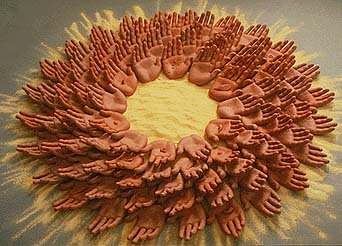
Some of these dynamics that are visible in our human systems are represented in contexts of conflicts characterized by violence. Violence has a surmountable effect on the human society and one of the responses of man to this phenomenon is non-violent peacebuilding intervention. Arts appear to be a major tool for peacebuilding, as it is an embodiment of the initiatives of man encapsulated in his feelings, ideas and actions. It tends to arouse society to transformation since it is an incarnated presence of the skills for attaining possible peace, reduction of violence, healing and wellbeing.
Paulo Fereire in his Pedagogy of the oppressed views Arts as the freedom of human agency to translating/interpreting the words of dialogue into a non verbal but visual form of communication. As a contemporary intervention tool, he ascribes it to being revolutionary. Arts as practice of embodiment therefore in Fereire’s context would mean another form of education through which communication makes human life hold meaning, being the result of critical thinking that perceives reality as a process.
Since transformation evolves around system-thinking and the fact of a relationship/network of systems, Suzi Gablik in The Reenchantment of Art presents the individual as an ‘engaged artist’ describing the peacebuilder. For her, in the process of restoration, Art moved by empathic attunement, not tied to an art-historical logic but orienting the world to the cycles of life, helps us to recognize that we are part of an ‘interconnected web’ that ultimately we can not dominate. This Art offers according to her, a completely different way of looking at the world.
Arts is both a Process and Product. It is for me, a means to attaining a goal and at the same time, it is the goal that has been attained. . Paulette More and Howard Zehr in the article – Art That Heals, capture the core/essence of the phenomenological arts as a peacebuilding tool thus,
Where so-called rational approaches to resolving conflict prove ineffective or insufficient, the arts in every medium-visual, arts, theatre, dance, literature, and film-can be deployed as tools for “creating opportunities for building across differences, addressing legacies of past violence, and imagining a now future” ‘.
Posted by charleyblogging on October 13, 2013
https://charlbiorah.blog/2013/10/13/arts-the-practice-of-embodiment/
Recent Comments
hallumsdaviana on The United States’ Nigeria Pol… Interview with… on Art as a Practice of Libe…

 Thoughtful Waves